Live Edge vs Straight Edge Shelves: Which Suits Your Space?

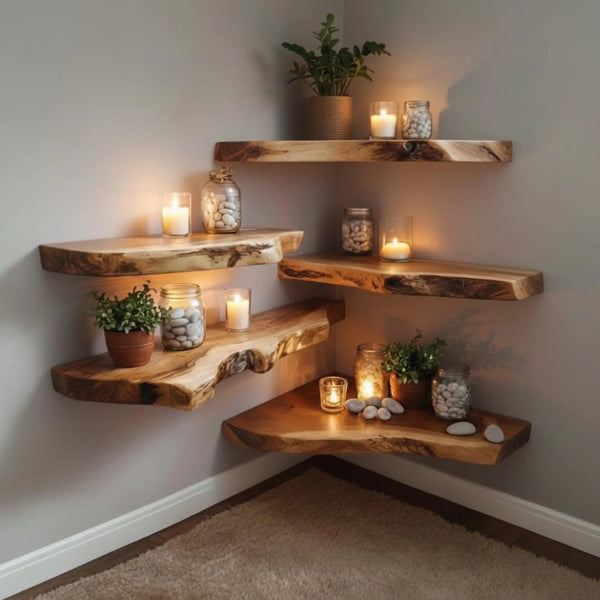
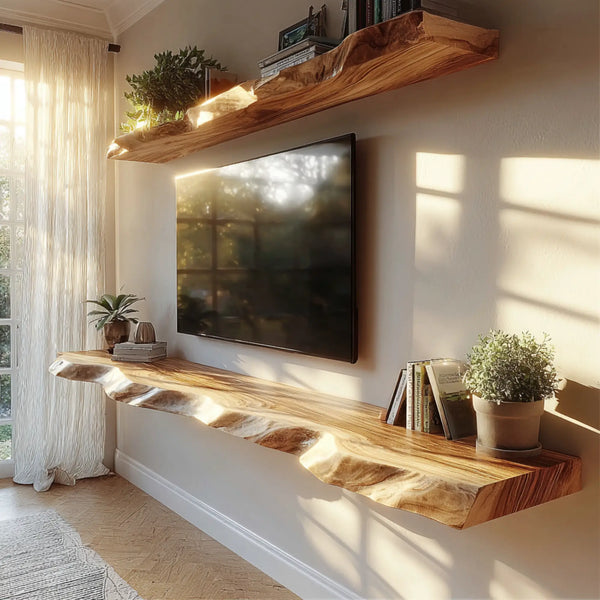
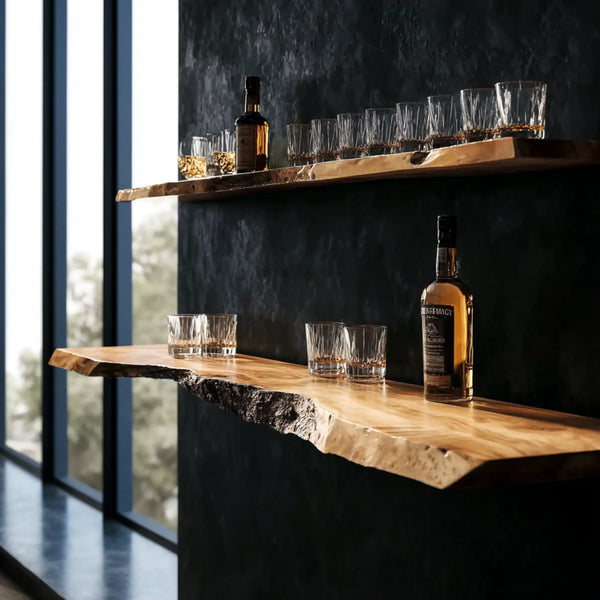
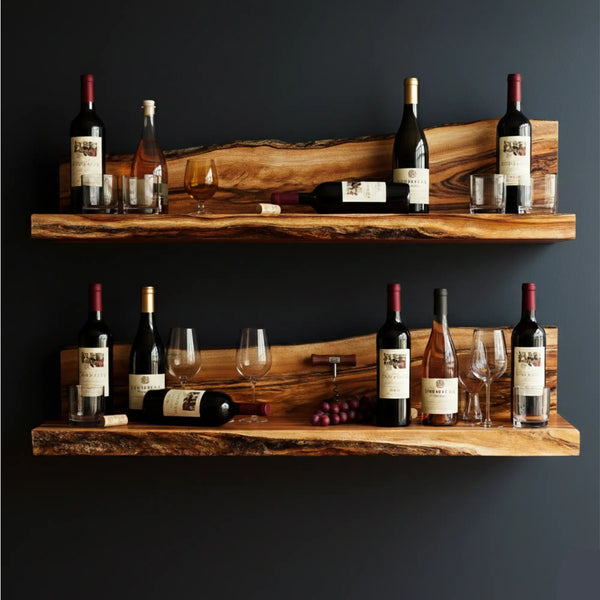
Live edge shelves showcase the natural contour of the tree for an organic, one-of-a-kind look. Straight edge shelves offer clean lines that blend into modern and minimalist interiors. Both styles use solid wood and display beautiful grain patterns, but they create distinctly different visual effects.
This comparison covers the key differences between live edge and straight edge shelves, including aesthetics, durability, maintenance, and which design styles suit each option best.
What are live edge shelves?
Live edge shelves preserve the original outer edge of the tree. Instead of cutting the wood into a uniform shape, craftsmen keep the natural contour intact and carefully finish it to highlight the organic curves.
Each live edge shelf is unique. The natural undulations, bark remnants, and irregular shapes developed as the tree grew over decades. No two pieces look identical, even when cut from the same log.
Live edge shelving gained popularity in the 2010s as homeowners sought ways to bring natural elements into interior spaces. The style connects modern living areas to the outdoors and adds warmth that manufactured materials cannot replicate.
Characteristics:
Natural, irregular edges that follow the tree's growth pattern
Visible bark line or cambium layer (often removed and smoothed)
Varying widths along the length of the shelf
Prominent display of knots, grain variations, and natural figure
Common wood species: Walnut, white oak, maple, acacia
What are straight edge shelves?
Straight edge shelves feature uniform, finished edges cut to precise dimensions. The wood displays the same beautiful grain patterns as live edge, but the clean lines create a more architectural appearance.
Straight edge shelving works in spaces where crisp geometry matters. The eye focuses on the wood's natural figure without distraction from irregular contours. Many designers describe this as letting the grain speak for itself within a refined frame.
Characteristics:
Clean, uniform edges with consistent width
Optional edge profiles (beveled, rounded, or square)
Predictable dimensions for precise placement
Grain patterns visible on top surface and edges ("grain spill over")
Common wood species: Walnut, white oak, cherry, maple
Live Edge vs Straight Edge Shelves: Key differences
Feature |
Live Edge |
Straight Edge |
Edge style |
Natural tree contour |
Uniform, finished |
Uniqueness |
Every piece different |
Consistent appearance |
Width |
Varies along length |
Consistent measurement |
Visual effect |
Organic, sculptural |
Architectural, refined |
Design compatibility |
Rustic, bohemian, eclectic |
Modern, minimalist, contemporary |
Cleaning |
Irregular surface, more effort |
Smooth edges, easier wipe-down |
Cost |
Higher (labor-intensive) |
Lower (standard processing) |
Availability |
Limited by natural shape |
Readily available |
Which is better for your space?

The answer depends on your interior style and practical needs.
Live edge shelves work best as statement pieces in spaces that celebrate natural materials. A single live edge floating shelf above a fireplace or in an entryway draws attention and sparks conversation. The organic shape contrasts beautifully with clean architectural lines, creating visual tension that feels both sophisticated and approachable.
Straight edge shelves suit spaces where the shelf should complement rather than dominate. In a gallery wall, reading nook, or kitchen display, straight edges provide structure without competing with the items on display. The uniform dimensions also make it easier to arrange multiple shelves in a cohesive layout.
For most homes, the practical choice comes down to function. A single accent shelf benefits from the drama of live edge. A wall of floating shelves for books or display items works better with straight edges that align cleanly.
Design styles and shelf pairings
Styles that suit live edge
Rustic and farmhouse: Live edge shelves reinforce the connection to natural materials already present in exposed beams, reclaimed wood, and stone surfaces.
Bohemian and eclectic: The organic shapes pair well with layered textures, plants, and collected objects from various sources.
Modern organic: Contemporary spaces that balance clean architecture with natural warmth use live edge as a counterpoint to smooth surfaces and neutral palettes.
Cabin and lakeside homes: Settings surrounded by nature benefit from interior elements that echo the outdoor environment.
Styles that suit straight edge
Minimalist: Clean lines and uncluttered surfaces call for shelving that disappears into the wall plane rather than drawing attention to itself.
Mid-century modern: The geometric precision of straight edge shelving matches the architectural lines of mid-century furniture and built-ins.
Scandinavian: Light wood straight edge shelves complement the simplicity and functionality central to Nordic design.
Contemporary urban: Smaller spaces benefit from straight edge shelving that maximizes visual order and makes rooms feel larger.
Combining both styles
Many homeowners use both live edge and straight edge shelving in different areas of the same home.
A common approach places a live edge statement shelf in the living room or entryway while using straight edge shelving in the kitchen, office, or bathroom. This creates visual variety without style conflict, as long as the wood species and finish remain consistent. For layout ideas that combine both profiles, see our floating shelf arrangement ideas.
The key is treating live edge as accent and straight edge as utility. When each style serves its natural strength, they complement rather than compete.
Care and maintenance
Both live edge and straight edge shelves require similar care for the wood itself. The difference lies in cleaning the edges.
Live edge maintenance:
Dust irregular contours with a soft brush or microfiber cloth
Clean crevices where dust accumulates along the natural edge
Inspect bark remnants periodically for loosening
Reapply finish oil annually to maintain protection
Straight edge maintenance:
Wipe down with a damp cloth as needed
Dust less frequently due to smooth surfaces
Clean edges with the same motion as the top surface
Reapply finish oil annually
If surface scratches appear, solid wood can be repaired without replacing the shelf.
Both styles last for decades with proper care. Solid wood shelving develops richer character over time as the grain deepens and the finish develops a natural patina.
FAQ
Are live edge shelves more expensive than straight edge?
Yes. Live edge shelves cost 20% to 50% more than comparable straight edge options. The price difference reflects additional labor for edge finishing, lower yield from each log, and the selection process for visually striking natural contours. Premium wood species like walnut increase the gap further.
Do live edge shelves warp or crack over time?
Properly dried and finished live edge shelves remain stable for decades. The key factors are initial moisture content (kiln-dried to 6% to 8%), quality finish application, and stable indoor humidity. Poorly processed live edge wood can crack or warp, so purchase from established craftsmen who control the drying process.
Can I install live edge shelves myself?
Yes, with appropriate hardware. Live edge shelves often weigh more than straight edge due to irregular thickness, so use heavy-duty floating shelf brackets rated for the weight. Mount into wall studs rather than drywall alone. The irregular back edge may require shimming to sit flush against the wall.
Which style works better for small spaces?
Straight edge shelves suit small spaces better. The uniform dimensions create visual order that makes rooms feel larger. Live edge can overwhelm compact areas unless used sparingly as a single accent piece.
Conclusion
Live edge shelves bring natural sculpture into your home, turning functional storage into a statement piece. Straight edge shelves provide refined simplicity that lets the wood grain shine within clean architectural lines. Both styles showcase the beauty of solid wood and last through years of daily use. Choose live edge for drama and individuality; choose straight edge for harmony and versatility.