Are Floating Shelves Still in Style? What Interior Designers Say in 2026

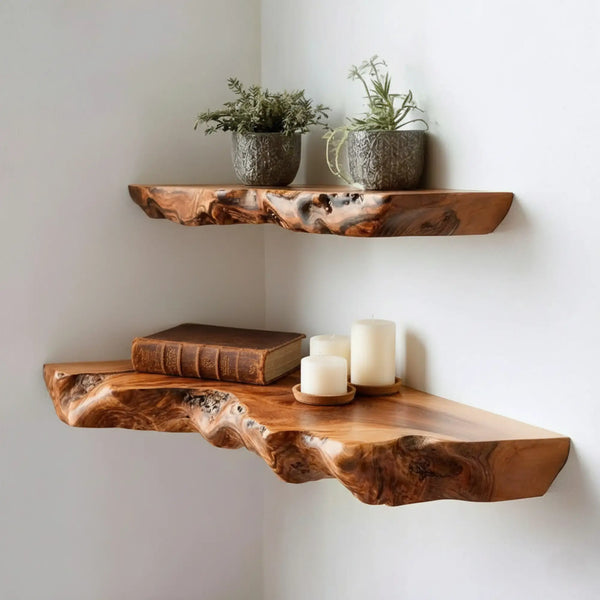
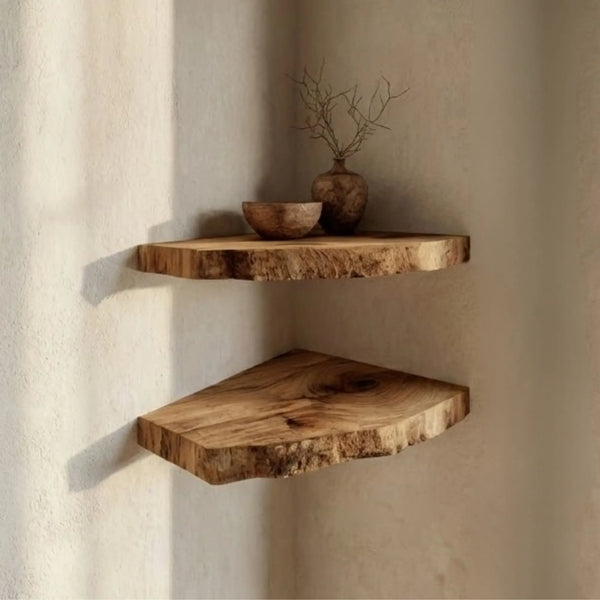
The short answer: yes. Floating shelves are not going out of style. But the version of floating shelves that was everywhere five years ago, thin white boards on a blank wall with a succulent and a candle, is no longer what designers are specifying. The style has matured. The shelves themselves have gotten thicker, the wood tones have shifted darker and warmer, the displays have become more restrained, and the materials have upgraded from pressed board to solid hardwood, stone, and metal.
Floating shelves are not a trend in the way that subway tile hexagons or barn doors were trends. They are a functional design element that adapts to the prevailing aesthetic of each era. In the 2010s, they were thin and white because minimalism demanded it. In 2026, they are thick, warm-toned, and intentionally styled because the design conversation has moved toward texture, warmth, and organic materiality.
The question is not whether floating shelves are still in style, but which version of them is current, which rooms benefit from them most, and when a different shelving solution makes more sense.
A Brief History of Floating Shelves
Understanding where floating shelves came from explains why they continue to adapt rather than disappear.
Era |
Development |
Mid-20th century |
Post-war architects experiment with concealing shelf supports within walls. The "floating" concept emerges as part of the modernist push toward clean lines and minimal visible hardware. |
1970s to 1980s |
Advances in metalwork and concealed bracket engineering make true floating shelves structurally viable for residential use. Heavy steel rods and internal support frames allow thicker shelves without visible brackets. |
2010s |
Minimalism peaks. Thin, white floating shelves become ubiquitous in interior design blogs, Pinterest boards, and rental apartments. Easy to install, affordable (MDF or melamine), and photogenic. The look is clean but the materials are disposable. |
2020s |
Material upgrade era. Designers shift to thicker profiles, solid wood, warmer tones, and curated styling. Floating shelves are treated as architectural features, not afterthought decor. Quality and longevity replace affordability as the priority. |
How Floating Shelves Have Changed (2015 vs. 2026)

The floating shelf of 2015 and the floating shelf of 2026 share the same principle (a horizontal surface mounted to a wall with concealed hardware) but almost everything else has changed.
Element |
2015 Floating Shelf |
2026 Floating Shelf |
Profile |
Thin (0.75 to 1 inch) |
Thick (1.5 to 3 inches), architectural feel |
Color |
White, light gray, bleached wood |
Walnut, deep oak, espresso, carbon-stained, natural Suar |
Material |
MDF, engineered wood, painted pressed board |
Solid hardwood, rift-sawn oak, live-edge wood, marble, steel |
Styling |
Maximalist (fill every inch with decor) |
Minimalist (fewer items, negative space, curated) |
Function |
Primarily decorative |
Dual-purpose: display + functional storage |
Extras |
None |
Integrated LED lighting, built-in planters, concealed outlets |
Shape |
Rectangular only |
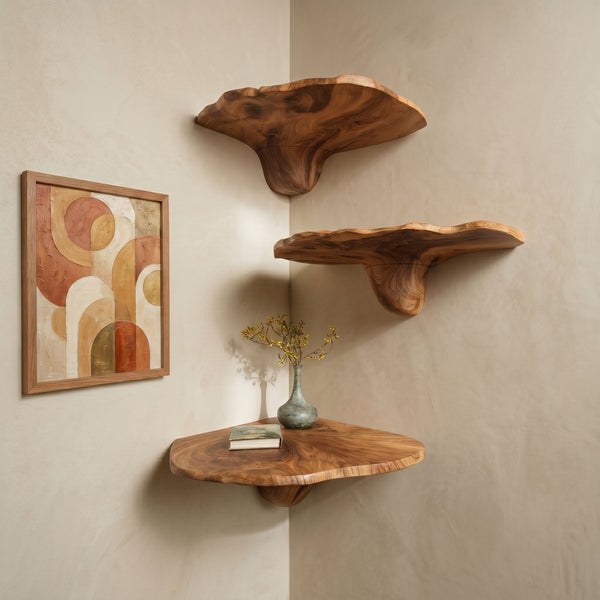
Rectangular, curved, asymmetric, organic forms |
The biggest shift is in intent. In 2015, floating shelves were a decorating shortcut. In 2026, they are treated as architectural features, planned during the design phase rather than added after move-in.
Why the Material Upgrade Matters
The shift from MDF to solid hardwood is not just aesthetic. It changes how long the shelf lasts, how it looks over time, and whether it can be repaired.
MDF and pressed board shelves:
Begin to sag under moderate weight within 1 to 2 years
Cannot be refinished if scratched or worn
Edges swell when exposed to moisture (especially in kitchens and bathrooms)
End up in a landfill when they fail
Solid hardwood shelves:
Maintain structural integrity for decades when properly mounted
Can be sanded and refinished if scratched (see our scratch repair guide)
Resist moisture when properly sealed (teak, Suar, walnut)
Develop a richer patina with age rather than deteriorating
Can be repurposed or passed on rather than discarded
The sustainability dimension is also relevant. A solid hardwood shelf from a managed forest (like sustainably harvested Suar) lasts 20+ years. An MDF shelf lasts 3 to 5 years before it warps, sags, or chips, creating a replacement cycle that generates more waste than the initial cost savings justify. The 2026 preference for natural materials is partly aesthetic (visible grain, warmth, texture) and partly environmental (buying once, lasting decades).
6 Design Styles Where Floating Shelves Work
Floating shelves are not tied to one aesthetic. Their appeal is that they can disappear into minimalist rooms or become statement pieces in more expressive interiors. The material, finish, and mounting style determine which design language the shelf speaks.
1. Modern Minimalist

The most natural fit. Floating shelves in modern minimalist spaces use hidden brackets, clean lines, and a neutral palette (matte white, light gray, charcoal). The display is sparse and curated: one or two objects per shelf, generous negative space, and no clutter. The shelf itself becomes part of the wall architecture rather than a separate piece of furniture.
2. Scandinavian
Scandinavian floating shelves favor natural wood, typically light-toned oak finished with oil or wax rather than lacquer. The design is functional and warm: a couple of books, a small potted plant, a framed photograph. The shelf blends into the room without calling attention to itself, which is the Scandinavian principle of quiet, honest design.
3. Japandi
The Japandi floating shelf borrows Japanese discipline (clean lines, balanced proportions, intentional negative space) and Scandinavian warmth (natural wood, soft textures). Walnut, bamboo, and muted neutral tones are common. The display is minimal and curated: a ceramic vessel, a single book, a small plant. Nothing extra.
4. Industrial
Industrial floating shelves break the "invisible hardware" rule. In this style, exposed metal brackets, pipe supports, and raw steel frames are the point. The shelf itself is typically reclaimed wood, rough-sawn, or thick chunky hardwood. The contrast between warm wood and dark metal is the defining visual.
5. Mid-Century Modern
Walnut and teak dominate mid-century floating shelves. The arrangement tends toward geometric: evenly spaced shelves with symmetrical displays, brass or gold-toned accents, and vintage-inspired objects. The shelf depth is modest (8 to 10 inches), keeping the display focused and not overpowering the wall.
6. Bohemian
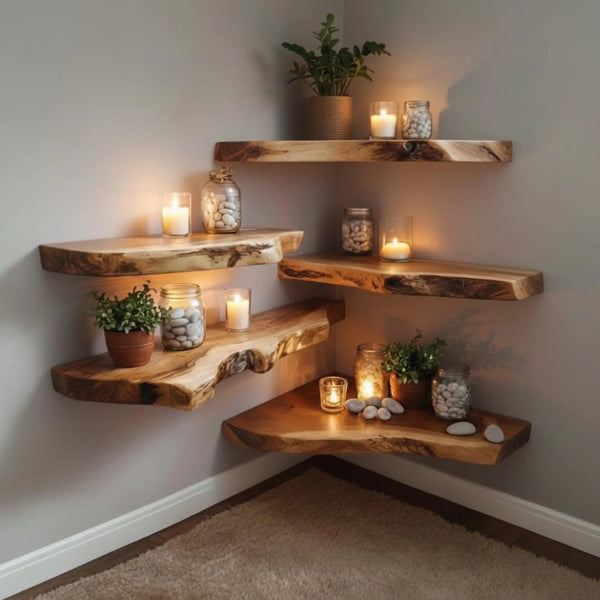
Bohemian floating shelves are the most eclectic. Mixed materials (wood, rattan, woven baskets), trailing plants, candles, books stacked horizontally and vertically, and collected objects from travel. The "rule" is visual abundance without visual chaos, which takes intentional layering.
When Floating Shelves Are NOT the Best Choice
Floating shelves are versatile, but they are not the right solution for every wall. Recognizing when another option makes more sense prevents frustration soon after installation.
Heavy Collections
If the shelf needs to hold a full row of hardcover books, cast iron cookware, or dense decorative objects, floating shelves with hidden brackets may not provide enough support. Shelves supported by visible brackets anchored into wall studs handle heavier loads with less risk of sagging. For specifics on load limits, see our floating shelf weight capacity guide.
Constant Rotation of Items
If the shelf will be used as active storage where items go on and off daily (pantry items, lunchboxes, backpacks), closed cabinetry is more practical. Floating shelves reward curated, semi-permanent displays, not high-turnover storage.
Plaster or Hollow Walls Without Studs
Floating shelves rely on secure wall mounting. If the wall is plasterboard/drywall with no accessible studs at the desired location, the shelf will sag or pull away under load. Heavy-duty cavity anchors help, but they have limits. Traditional shelves with visible brackets distribute load more effectively on weaker wall surfaces.
Complete Cabinet Replacement (Kitchens)
Replacing every upper cabinet with floating shelves creates long-term maintenance problems: dust, grease film, constant rearranging, and everything on display all the time. A mix of closed storage (cabinets) and selective open shelving (one or two sections) works better in kitchens.
What Makes a Floating Shelf Look Dated vs. Current
The difference between a floating shelf that feels current and one that feels 2016 is usually not the shelf itself but the combination of material, proportions, and styling.
Dated |
Current |
Thin profile (under 1 inch) |
Thick profile (1.5 to 3 inches) |
Stark white painted MDF |
Natural wood tones, stained or oiled hardwood |
Overcrowded display (every item touching) |
Curated display with negative space |
Matching sets (uniform picture frames, identical vases) |
Mixed textures (ceramic, wood, plant, book) |
Generic, mass-produced feel |
Material quality visible (wood grain, live edge, stone) |
Installed as an afterthought |
Planned as part of the room's design |
The single fastest upgrade: replace a thin, white MDF shelf with a thick, solid hardwood shelf in a warm tone. The proportions change, the visual weight changes, and the entire wall reads differently.
Frequently Asked Questions
Are floating shelves going out of style?
No. Floating shelves have evolved from a 2010s minimalist trend into a lasting design element that adapts to current aesthetics. The 2026 version uses thicker profiles, warmer wood tones, and intentional, curated styling rather than thin white boards with cluttered displays. Interior designers continue to specify them across modern, Japandi, Scandinavian, industrial, and mid-century styles.
What is replacing floating shelves?
Nothing is replacing floating shelves wholesale. Some designers are incorporating closed cabinets back into kitchens where open shelving was overused, and built-in wall niches are emerging as an alternative for recessed display. But floating shelves themselves remain widely used. The shift is not away from floating shelves but toward higher-quality versions with better materials and more thoughtful installation.
Are floating shelves trendy or timeless?
Floating shelves are closer to timeless than trendy. The specific materials and styling are trend-sensitive (white MDF shelves are dated; thick walnut shelves are current), but the concept of a wall-mounted shelf with concealed hardware has been in continuous use since the mid-20th century and shows no signs of declining.
When should you NOT use floating shelves?
Avoid floating shelves when you need to store heavy items (full sets of hardcover books, cast iron cookware), when the wall cannot be anchored into studs, when you are replacing all kitchen cabinetry (use a mix instead), or when the items on the shelf will rotate frequently and create a cluttered, unfinished look.
What style of floating shelves is in style right now?
Thick-profile shelves (1.5 to 3 inches) in warm wood tones (walnut, deep oak, natural Suar), with hidden brackets, styled minimally with a few curated objects and negative space. Integrated LED under-lighting for ambient glow and live-edge or natural-finished wood for organic texture are also current.
Can floating shelves work in every room?
Floating shelves can work in kitchens, bathrooms, living rooms, bedrooms, entryways, and home offices. The key is matching the material to the room's conditions (moisture-resistant wood in bathrooms, heat-resistant placement in kitchens) and using the shelf for its strength: displaying curated items rather than hiding clutter.
Floating Shelves Are Still in Style Because the Materials Have Caught Up
Floating shelves are not going out of style. They are going through a material and proportion upgrade. The thin, white, overcrowded version from 2015 has been replaced by thick, warm-toned, intentionally styled versions that function as architectural features.
The rules for keeping them current are straightforward: choose solid, high-quality materials with visible grain or texture; install thick profiles (1.5 inches or more); style with restraint (fewer items, more negative space); and match the shelf's tone and finish to the room's design direction.