Is It Cheaper to Buy or Build a Bookshelf? Cost Comparison Guide

When considering adding a bookshelf to your home, one of the first questions you might ask yourself is whether it is cheaper to buy or build a bookshelf. This common dilemma requires thoughtful consideration of various factors, including the materials involved, the tools required, your woodworking skills, and your budget. Both options have distinct advantages and drawbacks, and this guide will help you make an informed decision. From comparing costs and understanding customization benefits to exploring creative DIY projects like learning how to make a tree bookshelf, we will thoroughly examine whether buying or building suits your needs better.
What Determines the Cost of a Bookshelf
Before beginning the comparison, it helps to understand the costs involved in any bookshelf, whether you DIY or buy factory-made. These cost factors apply regardless of which path you choose.
Material costs cover the price of wood, MDF, plywood, hardwood, and other raw materials, with varying prices depending on the type and quality you select.
Tool costs include everything needed for measurement, cutting, assembly, and surface sanding. Each step requires specific tools that may or may not already be in your workshop.
Engineering complexity refers to the design, functionality, and surface treatment of the bookshelf. A simple rectangular unit costs far less to produce than a bookshelf with adjustable shelves, glass doors, or artistic shapes. The same logic applies to other wood furniture pieces — understanding the price range for room dividers shows how complexity and material choice drive cost across different furniture categories.
Transportation and delivery costs apply to both lumber arriving at your workshop and finished furniture arriving at your front door.
Time costs are often the most overlooked factor. Building takes hours that could be spent on other activities or earning income.
Comparing Costs: Buying vs. Building a Bookshelf
Cost comparison is critical when deciding between purchasing a ready-made bookshelf or constructing one yourself. While buying can be straightforward, building gives you more control over expenditures and customization.
Initial Investment and Hidden Costs of Buying
When you buy a bookshelf from a furniture store or online marketplace, the initial investment might seem reasonable. However, hidden costs can quickly add up. Shipping fees, assembly charges, and taxes can significantly inflate the final cost. Additionally, lower-priced bookshelves may lack durability, leading to replacement costs sooner than anticipated. A cheap bookshelf might seem like a good deal, but if it sags, wobbles, or needs replacement after a year, the long-term costs will be much higher. On the other hand, high-quality bookshelves tend to be more expensive initially but save money in the long run due to their longevity.
The Real Cost of Building a Bookshelf Yourself
Building a bookshelf yourself can be cost-efficient, especially if you already own essential woodworking tools. Most DIY bookshelves are made of wood, so let us look at what a simple three-tier wooden bookshelf actually costs.
The required basic tools include a measuring tape ($7), pencil ($2), square tool ($24), level tool ($5), circular saw ($44), electric drill ($24), screwdriver ($7), wood glue ($4), clamps ($7), sandpaper ($5), brushes ($7), and wood wax oil or paint ($9 to $17). The total cost of required tools comes to approximately $145, based on budget-friendly selections.
For board costs, solid wood boards run about $45 each, plywood about $9 per sheet, MDF about $7 per sheet, and veneer wood about $18 per board. For a standard three-tier solid wood bookcase, you typically need four to five main structural planks plus one thinner plank for the back panel. This will cost at least $200 in solid wood.
Time investment usually exceeds 10 hours for a complete build, and time is money.
Purchasing wood and hardware in bulk or from discount lumber suppliers reduces the expense further. Reclaimed or recycled materials also present economical choices, dramatically cutting costs compared to store-bought furniture. While you do need to factor in the time investment and skill level, the monetary savings when building a custom bookshelf can outweigh the convenience of purchasing if you already own the tools.
Hidden Costs Most DIY Builders Overlook
Beyond the initial production cost, several hidden expenses catch builders off guard.
Even if you already own drills, saws, and sanders, these tools wear down during cutting and drilling. Dull drill bits and replacement saw blades add to the cost over time.
DIY projects rarely achieve perfect accuracy, often resulting in incorrect cuts, the need to redo certain boards, and irregular scraps. These mistakes can turn what should be a cost-saving project into a more expensive one.
Drilling holes incorrectly, using the wrong angle leading to instability, or applying glue in the wrong place not only waste time but also require buying new materials.
If the structure is unstable, there may be repairs to damaged walls, replacement of fallen shelves, and even safety risks from injuries during construction or use.
Analyzing Long-Term Durability and Value
The long-term value of your bookshelf depends significantly on materials and craftsmanship. Custom-built shelves typically offer greater durability and strength, as you can personally select higher-quality materials, ensuring the furniture's longevity. On the other hand, inexpensive store-bought shelves, often constructed from engineered wood or particleboard, can deteriorate faster, requiring frequent replacements.
A well-made bookshelf, whether built or bought, is usually very cost-effective in the long run. While a quality purchased bookshelf may have a higher initial investment, factory engineering ensures load-bearing capacity is tested and consistent. Ultimately, building your own bookshelf can provide superior quality and value, while buying premium, professionally crafted options also delivers excellent long-term worth.
Customization Advantages of Building Your Own Bookshelf

One of the biggest draws toward building a bookshelf instead of purchasing is customization. When creating your furniture, you have total control over the design, size, materials, and finish, resulting in a piece perfectly tailored to your home and preferences.
Tailored Designs for Your Space
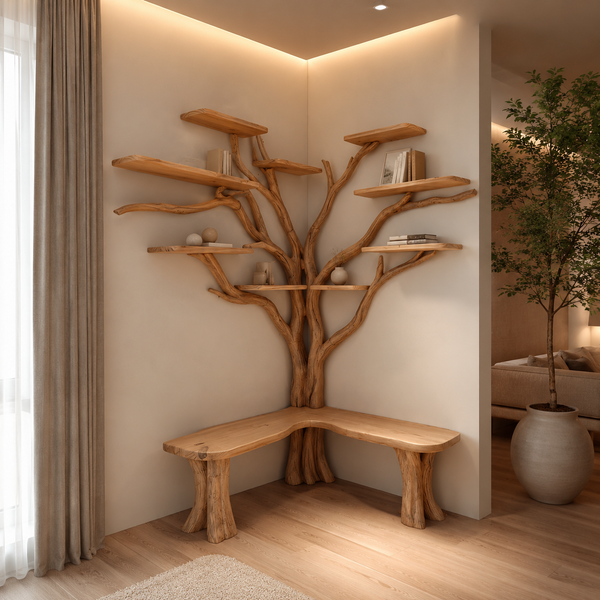
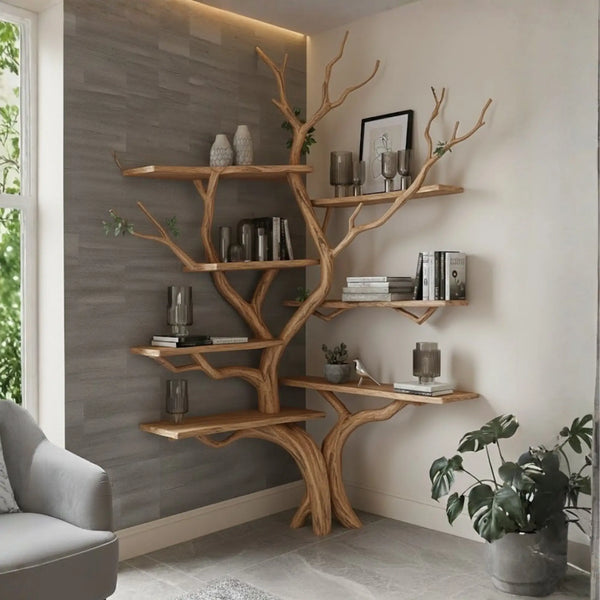
A significant advantage of building a bookshelf yourself is creating a unique piece precisely measured and designed for your space. If you have unusual wall dimensions, tight corners, or a specific theme in mind, crafting your own bookshelf becomes the perfect solution. For example, learning how to make a tree bookshelf provides an artistic and distinctive option for displaying books, blending functionality with style in ways store-bought alternatives rarely can.
Freedom to Choose Quality Materials
Building a bookshelf allows complete control over materials, enabling you to choose solid woods like oak, maple, walnut, or reclaimed lumber. These high-quality materials ensure a sturdier, longer-lasting shelf, and you can customize their finish to match existing furniture perfectly. In contrast, many store-bought bookshelves are crafted from lower-quality engineered woods, limiting durability and aesthetics.
Unique DIY Designs
Creative DIY bookshelf projects add character and uniqueness to your space. Floating shelf arrangements, tree-shaped bookshelves, and stacked book tree designs give you freedom beyond traditional styles, allowing personal expression and making your furniture a talking point. With a little creativity, your bookshelf can become a work of art, transforming your room's appearance and highlighting your personality in a way store-bought pieces rarely achieve.
Time, Skill, and Tools: Evaluating Your Capacity to DIY
Before deciding if it is cheaper to build or buy a bookshelf, evaluate your available time, woodworking skills, and tools. Understanding these practical considerations is vital to determining which approach suits your lifestyle best.
Assessing Your Woodworking Skills
Building a bookshelf requires some woodworking skills, from basic measuring and cutting to more advanced joinery techniques. For beginners, simple designs may be feasible, but complicated projects like intricate tree-shaped designs could demand more experience. If woodworking is not within your skillset, a DIY project may become costly or frustrating. Purchasing a professionally made bookshelf or choosing an easy-to-assemble option might be more practical.
Availability of Tools and Equipment
The cost-effectiveness of building a bookshelf partly depends on the tools you have available. Basic shelves require common tools like drills, saws, and sanders, but complex designs may necessitate specialty equipment. Renting or purchasing tools can increase costs significantly if you lack these items. If you already own or have easy access to these tools, the cost advantage of building your bookshelf improves significantly.
Factoring Time and Labor into the Cost
Time is another critical consideration when assessing cost. Building a bookshelf is rewarding but time-consuming, especially for beginners who should expect more than 10 hours of work. Consider whether investing hours into construction, finishing, and assembling suits your schedule. If time is limited or valuable, buying a pre-made bookshelf might be more economical, ensuring convenience without compromising quality.
Cost Comparison Chart: Build vs. Buy
|
Comparison Item |
DIY (Build Your Own) |
Buy (Ready-Made) |
|
Materials Cost |
Low to high depending on wood type; hardwoods are expensive, plywood is cheaper |
Moderate; factory pricing lowers material cost |
|
Tools Required |
High (saws, sander, clamps, drill, paint tools, safety gear) |
None or minimal; usually includes assembly tools |
|
Time Investment |
10 to 20+ hours for cutting, assembling, sanding, and finishing |
0 to 1 hour for unboxing or simple assembly |
|
Difficulty Level |
Medium to high; requires woodworking skills and precise measurements |
Low; follow instructions and assemble |
|
Safety |
Varies depending on structural design and skill level |
High; professional engineering and anti-tip features |
|
Appearance Quality |
Can be average unless skilled; finish quality varies |
High; smooth finish, precise cuts, professional work |
|
Durability |
Depends on materials and craftsmanship; inconsistent longevity |
High; factory-tested for stability and long-term use |
|
Maintenance Cost |
Higher; may need repainting, tightening screws, adjusting |
Lower; durable coatings and hardware with warranty |
|
Customization |
Excellent; fully customizable size, finish, and layout |
Limited customization, but many styles available |
|
Total Cost |
Often ends up more expensive than buying, especially for complex designs |
Usually cheaper and offers better value for the quality |
When It Is Cheaper to Build Your Bookshelf
Building your own bookshelf will be cheaper if you meet the following conditions:
You already have the tools
You need very specific dimensions
You want a built-in bookshelf
You want a solid wood bookcase at lower cost than retail
You enjoy woodworking and DIY, and appreciate unique furniture
You plan to make multiple bookshelves so tool costs spread out
You have spare time available for the project
You have access to reclaimed or discounted materials
When It Is Cheaper to Buy a Bookshelf
Buying a bookshelf is cheaper for you if:
You lack the tools
You have limited time
You want glass doors (making them yourself is very expensive)
You want a professionally finished look
You need a warranty
You want a modern aesthetic that factory production achieves more cheaply
Buying a ready-made bookshelf with glass doors or complex features is usually far cheaper than sourcing and assembling the materials yourself.
Frequently Asked Questions
Is it cheaper to buy or build a bookshelf?
For most people without existing tools, buying is cheaper. A ready-made bookshelf costs $40 to $350 depending on quality, while building from scratch with new tools costs $345 or more for a solid wood unit. However, if you already own tools, building from plywood or pine can cost as little as $50 to $80 in materials, making DIY significantly cheaper than buying equivalent quality.
How much does it cost to build a bookshelf from scratch?
The total tool cost is approximately $145 if you need to buy everything. Board costs for a three-tier solid wood bookcase run at least $200. Combined with hidden costs like material waste and finishing supplies, a first-time builder should expect $345 to $450 total. Without tool purchases, materials alone cost $200 to $260 for solid wood or $50 to $80 for plywood.
What are the hidden costs of buying a bookshelf?
Shipping fees, assembly charges, and taxes can significantly inflate the sticker price. Lower-priced bookshelves may also lack durability, leading to replacement costs sooner than expected. A cheap bookshelf that needs replacing every one to two years costs more over time than a quality piece with a higher initial price.
How long does it take to build a bookshelf?
Building a basic three-tier bookshelf usually takes more than 10 hours for a beginner, covering measuring, cutting, assembling, sanding, and finishing. Experienced woodworkers can complete the same project faster, but drying time for finish adds another 24 to 48 hours regardless of skill level.
What is the cheapest material to build a bookshelf?
MDF is the least expensive at approximately $7 per sheet, followed by plywood at about $9 per sheet. Solid wood boards start around $45 each. For near-free options, reclaimed pallet wood or salvaged lumber works well for rustic live edge wood designs.
Conclusion
Deciding whether it is cheaper to buy or build a bookshelf involves evaluating costs, customization options, time, skill level, and long-term value. While DIY options can save money and offer satisfying customization opportunities, buying a bookshelf provides convenience, speed, and professional quality assurance. Creative projects such as learning how to make a tree bookshelf or designing unique floating shelf arrangements can transform your room in ways store-bought pieces rarely match.
For those who own tools, enjoy the process, and have time to invest, building delivers excellent value and complete creative control. For everyone else, a quality ready-made bookshelf offers the best balance of affordability, durability, and professional finish. Either way, focus on long-term value rather than sticker price alone, and choose materials and construction that will serve your home for years to come.