Rustic Entryway Bench: How to Pick the Right One

A rustic entryway bench does a lot of work in a small space. It provides seating for putting on and removing shoes, a designated drop zone for bags and keys, and storage that keeps daily clutter from spreading into the rest of the house. More than a functional piece, the bench invites everyone to pause, settle, and get organized before moving deeper into the home.
What separates a rustic bench from other styles is the lived-in, natural look — visible wood grain, organic lines, hand-finished surfaces, natural knots, and warm tones that feel grounded rather than polished. Some pieces lean close to farmhouse style with a sturdy silhouette and familiar comfort. Others are more sculptural with a cleaner shape while keeping the solid wood warmth. This guide covers how to choose the right style, storage type, size, material, finish, and placement for a rustic entryway bench that works in your space.
Rustic Entryway Bench Styles

Rustic entryway benches fall into several style categories. The right one depends on your home's existing interior and how much visual contrast you want at the entrance.
Farmhouse
Farmhouse benches lean into heritage and history. They usually feel thicker and steadier, with a more traditional presence. They feature distressed finishes, turned legs or vintage bobbin legs, chunky joinery, and reclaimed wood that bears the marks of time. A bench in this category often resembles a repurposed trunk or a church pew, offering deep internal storage and a heavy, substantial presence in the room. Whitewashed, matte black, and natural weathered finishes are the most common options. This style works well in homes with shiplap walls, vintage rugs, iron hooks, and warmer color palettes.
Mid-Century Rustic
Mid-century rustic keeps the wood warmth but cleans up the lines. The profile is thinner, the curves are softer, and the visual weight is lower than farmhouse designs. A mid-century rustic bench may have a sculptural seat or tapered legs that give it a lighter, more refined presence. This style works well in homes mixing organic materials with a more modern layout, and pairs naturally with rounded mirrors and linen accents.
Industrial Rustic
Industrial rustic benches combine reclaimed wood with metal components. Square iron legs or steel frames support a wooden seat top, blending the warmth of natural wood with the structural feel of exposed metal. This style complements homes with exposed brick, concrete floors, or metal fixtures. The metal-and-wood combination provides strong structural integrity while maintaining rustic character.
Live-Edge
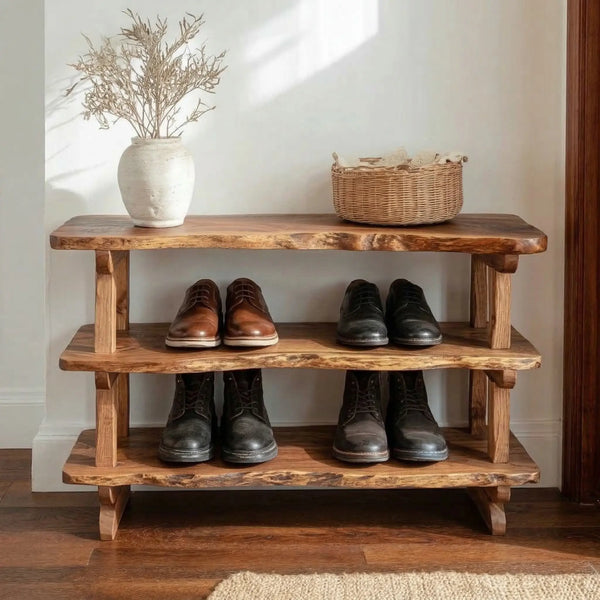
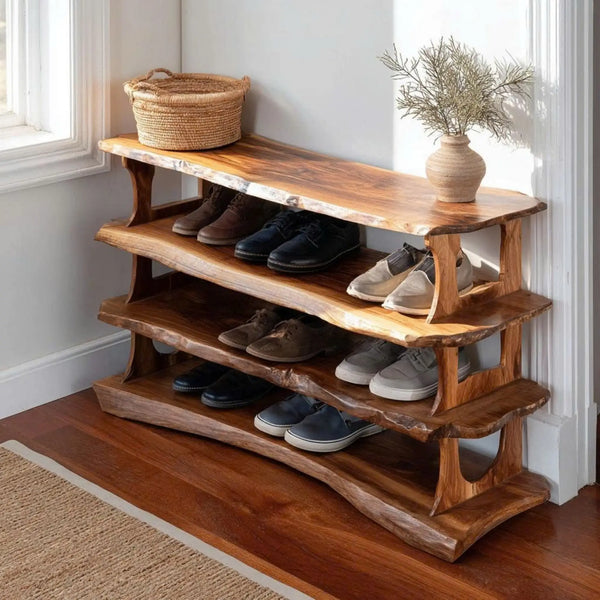
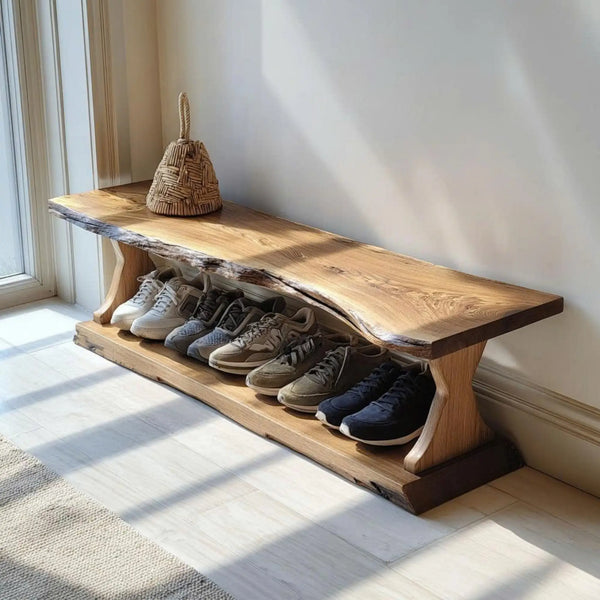
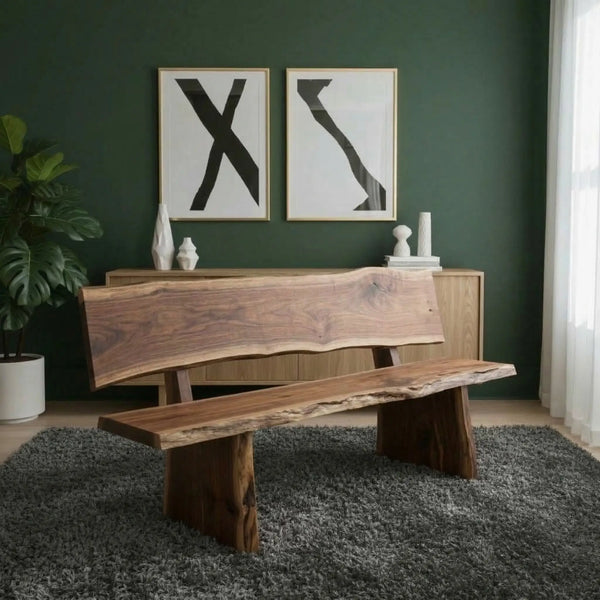
Live-edge benches use wood slabs that retain the natural outer edge of the tree, preserving knots, voids, and organic curves that make each piece one of a kind. The raw, uneven edge creates a contemporary rustic look that works in both modern and traditional homes. For more on what makes live edge wood distinctive and how it ages, the appeal comes from celebrating imperfections rather than hiding them.
Hall Tree
Hall tree benches combine a bench seat with an overhead coat rack, hooks, and sometimes a mirror and upper shelving in a single freestanding unit. This configuration creates a complete entryway station for outerwear, bags, shoes, and hats without separate wall-mounted hardware. Hall trees are the stronger choice when an entry must manage coats, bags, umbrellas, and shoes in one tight zone. A simple bench gives more freedom to style the wall above with hooks or artwork and looks less heavy in open-concept homes.
Cottage
Cottage-style rustic benches use lighter finishes and charming details. Softer wood tones, two-tone wood finishes, painted surfaces with intentional distressing, and smaller proportions suit foyers and small entryways where a relaxed, welcoming atmosphere matters more than bold visual impact.
Bench With Back vs Backless
Benches with a back panel and armrests offer more comfortable extended seating and provide a surface for mounting hooks or a mirror directly on the unit. Backless benches have a smaller visual footprint, slide under console tables or windowsills when not in use, and work in tighter spaces where a bench with a back would block a sightline or door swing.
Should Your Rustic Entryway Bench Have Storage?
The storage question is worth answering before shopping, because it narrows the options significantly.
Choose storage if: your front door collects shoes every day, you need a hidden or semi-hidden spot for grab-and-go items like pet gear, hats, or gloves, you want one piece to do more work in a compact area, or you have kids who need an easy drop-zone.
Choose a simple bench if: your entry already has baskets or a coat closet, you want the wood shape and grain as the main visual focus, you prefer a lighter look with more open floor space visible, or you want the bench flexible enough to move to another room later.
If storage is the right call, these are the main configurations:
Flip-Top
Flip-top benches open from the seat to reveal a spacious internal compartment. This design works well for bulky off-season items such as winter blankets, heavy coats, and boots you do not wear daily. The trade-off is that you need to clear the seat surface and stand up before accessing the contents. Safety hinges that prevent the lid from slamming shut are critical in households with children.
Cubbies and Baskets
Open cubbies beneath the seat provide rapid access to shoes, scarves, gloves, and umbrellas. This is the most popular configuration for busy families because items are visible and reachable without opening anything. Woven baskets made from seagrass, water hyacinth, or wicker fit into the cubbies to add texture and contain smaller items. Assigning one basket per family member and adding simple labels keeps each person's belongings separated.
Drawers and Cabinet Doors
Drawers and cabinet doors give the bench a cleaner, furniture-like appearance. Drawers organize loose items such as keys, dog leashes, and sunglasses. Cabinets hide larger boots or bags behind closed doors. This configuration mimics credenza or sideboard styling, which suits entryways where you want organized storage without visible clutter.
Open Shelving
Two-tier open shelving beneath the seat keeps shoes and bags accessible while maintaining a lighter visual footprint than closed storage. The open design works particularly well in small entryways where a solid base would make the bench feel heavy and block visual space.
What Size Rustic Entryway Bench Do You Need?
The right bench size depends on your entryway dimensions and how many people use the space daily.
|
Size |
Length |
Best Entryway Width |
Seats |
|
Compact |
Under 40 inches |
Narrow hallways, small foyers |
1 person |
|
Standard |
40 to 50 inches |
Medium entryways |
2 people |
|
Large |
Over 50 inches |
Spacious foyers, mudrooms |
2 to 3 people |
Seat height should land around 17 to 19 inches for most adults. Seat depth between 12 and 18 inches is common for entry use — deeper benches risk becoming tripping hazards in narrow passages.
Before purchasing, measure these five things: the wall where the bench will sit, the door swing when the door is fully open, the walkway from entry into the home, any nearby closet, shoe cabinet, stair opening, or similar obstacle, and the vertical space above the bench if you plan to hang hooks or art. Leave a minimum of 36 inches between the front edge of the bench and the opposite wall so people can sit, lean forward for shoes, and stand up without restriction.
Weight capacity varies by material and frame type. Solid hardwood benches with metal frames handle 400 to 500 pounds. All-wood benches typically support 250 to 400 pounds. Check the listed weight capacity before purchasing, especially if the bench will seat two adults simultaneously.
What Materials Hold Up in an Entryway?
Entryways handle more moisture, dirt, and temperature variation than most interior rooms. Shoes carry rain, mud, and snow directly to the bench area. The material you choose needs to withstand these conditions without rapid deterioration. Handcrafted solid wood benches built with traditional joinery outlast factory-assembled alternatives because the joints distribute stress through the wood grain rather than concentrating it at fastener points.
Reclaimed Wood vs New Solid Wood
Many shoppers search for reclaimed wood because they like the aged look — old nail marks, color variation, surface wear, and a look full of history. A new solid wood bench gives much of the same warmth while offering more consistency in structure and finish. Handcrafted work allows natural movement in the grain, organic edges, visible texture, and a character-rich surface without the heavy patching that reclaimed pieces sometimes require. If you love the reclaimed look, focus on rich grain variation, textured finishes, lived-in color tone, and slightly irregular edges or shaping. A lifecycle analysis published by the U.S. Forest Service found that producing virgin lumber consumed roughly 13 times more cumulative energy than using reclaimed wood, with about 5 times greater global warming potential.
Solid Hardwoods
Oak, teak, walnut, cherry, hickory, acacia, elm, and mango wood provide strong frameworks for benches that need to handle daily weight and stress. Teak contains natural oils throughout its grain that repel water without any applied finish, which makes it one of the few hardwoods that can sit near a wet entryway floor without warping or developing mold. Oak and walnut hold up well when sealed with a surface finish and require moderate seasonal maintenance. Quartersawn white oak exposes distinctive medullary ray patterns that give the surface a flecked, textured look prized in Mission and Arts and Crafts style furniture. Cherry darkens naturally with age and light exposure, developing a rich patina without refinishing. Hickory is the hardest domestic hardwood commonly used in furniture and handles heavy daily impact without denting. Elm offers strong interlocking grain that resists splitting, while mango wood provides a mid-priced hardwood alternative with distinctive swirling grain patterns.
Pine and Softer Woods
Pine is lightweight and less expensive, but it dents and scratches more easily under the impact of shoes, bags, and keys dropped on the surface. In high-traffic entryways, softer woods show wear faster and need more intensive protection from humidity and moisture than hardwoods.
Metal Frames
Wrought iron and steel frames paired with wood seats provide structural integrity and a visual contrast that defines the industrial rustic style. Metal legs resist moisture damage better than wood legs in entryways where wet shoes and umbrellas create persistent damp conditions near the floor.
Which Finish Handles Entryway Conditions?

The finish on a rustic entryway bench does more work than on furniture in drier, lower-traffic rooms. Rain tracked in on jackets, snow melting off boots, and daily abrasion from bags and shoes all test the surface.
Polyurethane forms a protective film on the wood surface that blocks moisture from penetrating the grain. Oil-based formulas build a thicker coating and gradually shift the wood tone toward warmer hues as they cure, while water-based versions dry thinner and preserve the wood's original color. Both outperform penetrating oil finishes for stain and water resistance in high-traffic areas. Choosing the right wood finish depends on whether you prioritize the natural feel of the wood or maximum surface durability.
Distressed finishes offer a practical advantage in entryways. New scratches and scuffs blend into the existing texture rather than standing out against a pristine surface. This characteristic makes distressed benches particularly forgiving in homes with children and pets.
Painted finishes in semi-gloss or satin perform better than flat matte in entryway conditions. The slight sheen resists moisture penetration and wipes clean more easily.
How to Choose the Best Wood Entryway Bench
Looking past the photo and asking how a piece is made and how it will wear separates a bench that lasts from one that disappoints within a year.
Solid wood construction: an entryway bench gets daily use. Solid wood handles that stress better than thin veneer or particle-heavy builds and develops a nicer surface over time rather than degrading.
Handcrafted detail: handcrafted work changes the feel of a bench. It shows in the shaping, the edge work, and the way the grain stays visible through the finish. A bench with real variation feels different from one built by uniform factory repetition.
Edge style: a live edge bench feels more organic and rustic. A straight edge bench can still carry rustic warmth if the wood grain and finish do the work. Pick based on how much visual texture the rest of the room already has.
Base design: look at how much visual weight the legs carry. Thick slab legs feel heavier and more grounded. Open bases with thinner legs feel lighter. In small entries, lighter-looking bases often work better because they keep the floor plane visible.
Press the seat center: press down firmly and release. A solid hardwood bench absorbs the force without flexing or creaking. If the seat bows visibly or you hear joint noise, the construction will not improve with use.
Lift one end: a well-built solid wood bench in the 40 to 50 inch range weighs 30 to 50 pounds. If a full-size bench feels light enough to carry one-handed, the material is likely pine, MDF, or thin engineered wood rather than the hardwood the listing may claim.
How to Style a Rustic Entryway Bench
Rustic furniture has presence on its own, so it does not need much help. The goal is a finished look without turning the entry into a cluttered utility corner.
Place the bench against the longest uninterrupted wall in the entryway. This position keeps the walking path clear and gives the bench visual weight as a grounding element. Avoid placing it where the front door swing arc would hit the bench or where it blocks the path to other rooms.
A simple layered setup covers most entries: the bench itself, one wall storage element such as hooks or a coat rack above, one basket below or beside the bench for everyday items, and a mirror or simple artwork above. That combination keeps the area useful without overloading the space.
Pair the bench with a mirror above it to reflect light and make the entryway feel more open. An entryway console table with mirror combination works well in larger foyers, while a wall mirror directly above the bench suits tighter spaces.
Layer one cushion or small textile on the seat if you want a softer feel. One or two throw pillows in farmhouse patterns like ticking stripes or buffalo check add warmth without cluttering the seating surface. A potted plant or small arrangement of greenery beside the bench adds freshness and reinforces the rustic aesthetic.
A rug beneath the bench anchors the piece visually and catches dirt and moisture before it spreads to the rest of the floor.
How to Keep a Rustic Bench Looking Good
A rustic entryway bench sits in one of the hardest-working zones in your home. Basic upkeep prevents moisture damage and keeps the finish protective.
Wipe dust and grit off with a soft dry or lightly damp cloth. Dry wet shoes or umbrellas before leaving them pressed against the wood for hours. Address spills and mud immediately by blotting rather than rubbing.
Use felt pads under baskets or trays that stay on the bench to prevent scratching the surface beneath them. Keep the bench away from direct heat vents when possible, as sustained heat dries wood and accelerates cracking at joints.
Reapply oil or wax every few months if your bench has a penetrating oil finish. Polyurethane finishes need less frequent attention but should be inspected seasonally for chips or worn spots where moisture could reach bare wood. When surface scratches appear, removing scratches from solid wood is straightforward with light sanding and finish reapplication on the affected area.
With live edge or heavily grained wood, small shifts in tone and texture over time are part of the appeal. They tend to make the bench feel better with age, not worse.
CITA Interior crafts solid wood furniture from hardwoods with natural finishes, designed for daily use as both functional pieces and visual focal points in living spaces.